Earlier this year, KairoPact applied to Coefficient Giving. We knew its priorities. What we hadn't grasped was the moral reasoning behind them, a way of thinking about giving called effective altruism.
Put simply, effective altruism is the idea that if you want to do good, you should use evidence and careful reasoning to find where your money and time will help the most, and then give there, even if it's far from home.
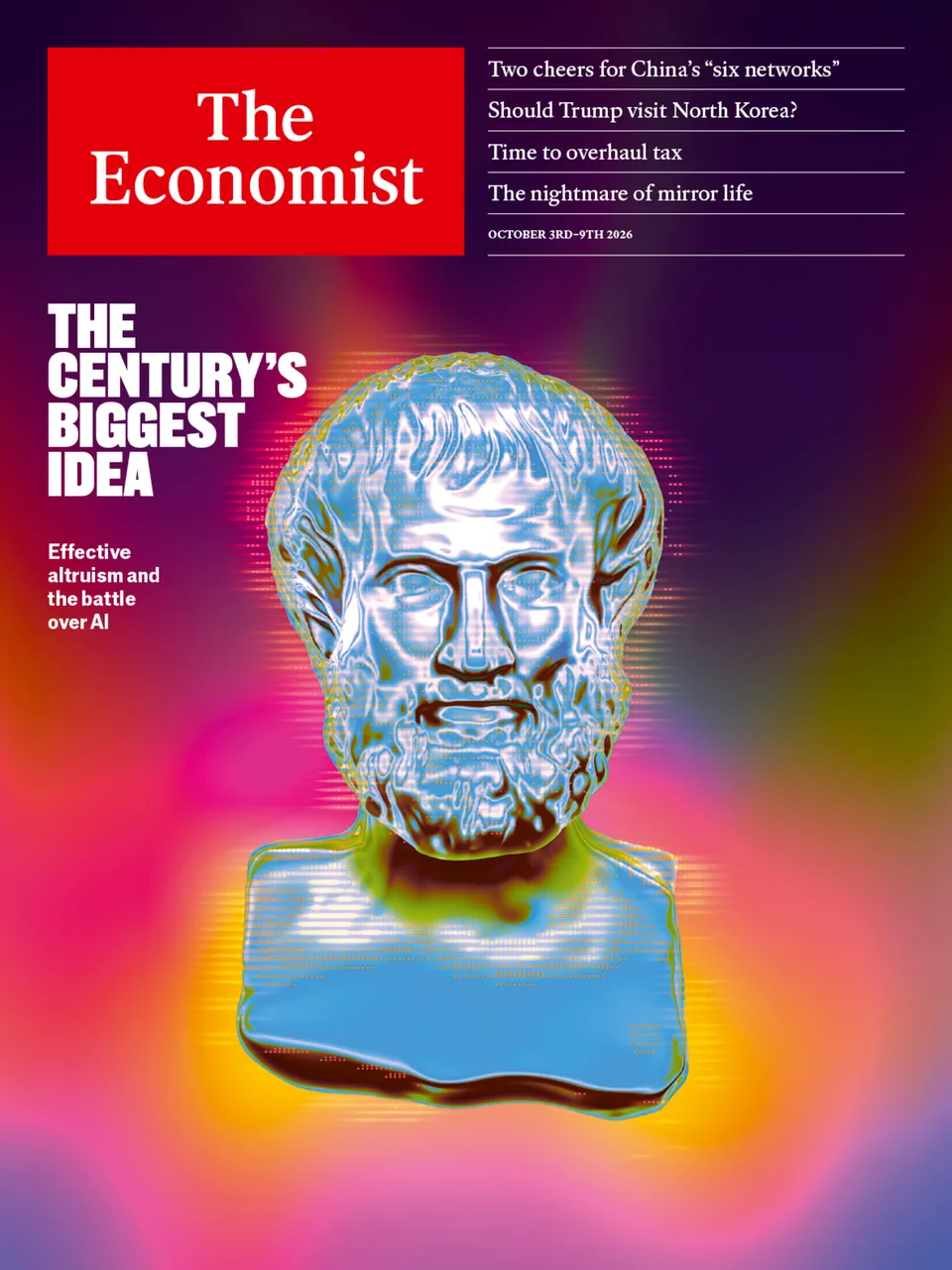
Coefficient Giving, formerly Open Philanthropy, is what The Economist calls the movement's largest funder. In October The Economist put effective altruism on its cover and called it "this century's biggest idea." Its editorial added a sharper verdict: "The movement is admirable, but dangerous."
I've spent 24 years in development. I thought I understood why people give. That week made me look again.
Most giving doesn't start with a spreadsheet
Mine didn't. My interest in this work comes from my faith. One verse has stayed with me for years: "For as the body without the spirit is dead, so faith without works is dead also" (James 2:26). For me, the development sector is where the works happen.
I write from my own Christian faith, but I'm far from alone. Islam has zakat, a yearly share of wealth for people in need. Christians have the tithe. Hindu and Buddhist traditions honor dana, generous giving, and Sikhs practice seva, service as worship. In southern African traditions of ubuntu, our humanity is bound up with each other's. These traditions differ, but each asks us to look beyond ourselves.
None of this is irrational. But it doesn't answer the question at the heart of effective altruism: where will my money do the most good?
The question that started a movement
The idea goes back to 1972, when the philosopher Peter Singer offered a thought experiment. You see a child drowning in a shallow pond. Wading in will ruin your clothes. Of course you save the child. Yet every day, people far away die for want of food or medicine that would cost little more, and most of us carry on with our day.
From there grew a movement that tries to make giving more careful. Before funding a problem, effective altruists ask three questions. Is it important: how many lives does it touch, and how badly? Is it neglected: is it getting less attention and money than it deserves? Is it solvable: will extra money actually make a difference? Giving What We Can asks members to give at least 10% of their income, a modern echo of the tithe. Some of the movement's best-known money has gone to malaria nets, deworming and cash transfers for poor families in Africa and South Asia, much of it in our own regions.
The development sector needs more of this discipline, not less. My faith says belief has to show up in works. Effective altruism adds a fair test: do the works actually work, and are they going where they're most needed?
Two minds, one gift
Effective altruism speaks to the reasoning mind. But Daniel Kahneman's Thinking, Fast and Slow taught me that many of our choices come from the fast, instinctive mind. Studies of the "identifiable victim effect" find that people often give more to help one named child than to help thousands described in statistics.
That fast mind of loyalty, faith and feeling is often why we give at all. But it can lead us astray. I'll say this carefully, as a person of faith. A place of worship that runs a hospital or feeds the hungry does great good. Yet one more grand building in a town that already has many, in my own tradition or any other, may not be the wisest use of a gift.
I've long relied on Aristotle's three appeals: logos (reason), pathos (feeling) and ethos (trust in whoever is asking). Effective altruism stands on logos, though even its founding story, the drowning child, works on the heart first. Much fundraising leans on pathos. The older traditions lean on ethos: we give through people we trust. I put reason first, but I don't discount the other two. A gift moved by feeling, made through people we trust and checked by reason is the one most likely to do good.
Who is my neighbor now?
In Luke's Gospel, a lawyer asks Jesus, "And who is my neighbour?" The answer is the parable of the Good Samaritan. The neighbor turns out to be a stranger from a group others looked down on, a man who stopped to help someone he owed nothing. The parable doesn't shrink the circle of care. It widens it.
For most of history, though, our resources set the limits of that circle. That may be about to change. Many people expect AI to reshape the economy on the scale of the industrial revolution, and it's already creating enormous fortunes. Anthropic, an AI company that The Economist describes as home to many effective altruists, has committed 5% of its shares to a fund for public causes. Its founders have promised to give away 80% of their own shares. By Fortune's estimate, together these could be worth well over $100 billion. None of it is money in hand yet, but the direction is clear.
When giving reaches that size, your neighbor is no longer the person next door. It's millions of people you'll never meet, and effective altruists insist that distance doesn't make their suffering matter less. At that scale, good intentions alone can waste money as no village donor ever could. Effective altruism is preparing us for the day when huge sums must be spent well.
A question of proportion
My concern isn't the method. It's proportion.
Many effective altruists believe animal suffering matters too. Shrimp show where that can lead. Rethink Priorities rates a single shrimp's capacity to suffer far below a human's, but an estimated 230 billion shrimp are farmed at any moment, with little attention to their welfare. Put that through the three questions and shrimp come out as an enormous, neglected problem, so a Shrimp Welfare Project now campaigns for them. That's the method working as designed, and it's where many donors start to feel something has gone strange.
The future raises the same question in a bigger way. Do people not yet born count as our neighbors? Some effective altruists, known as longtermists, say yes, and give great weight to future generations, who could number in the trillions. They worry most about disasters that could end humanity, such as AI that grows too powerful to control. I don't dismiss this. The Bible places humanity in the garden "to dress it and to keep it" (Genesis 2:15), and I read that as a call to stewardship.
But the opposite extreme is a failure too. Some longtermists would put distant risks first even if it means less money for the world's poorest people now. If you count trillions of people who might live in the future, even a very small risk to all of them can look bigger, on paper, than a mother today who can't reach a clinic. It gets easy to forget that every single person matters in their own right. Schindler's List echoed a Jewish teaching on exactly this: "Whoever saves one life saves the world entire."
What the traditions know, and where they fall short
The older traditions of giving have something to add. Giving close to home lets you see what happens to the money, and long relationships build the trust that lets a program survive a bad year. But proximity can also breed favoritism, and projects chosen for how they look in the home village. Traditional giving needs evidence just as much as evidence-led giving needs local knowledge.
Effective altruism asks whether a program works. The traditions ask who it's for, and whether those people have a say. Good giving needs both.
How worried should we be about AI?
AI risk has become one of the most prominent debates within effective altruism, so here's my view.
In The Thinking Machine, Stephen Witt plays Nvidia's chief executive, Jensen Huang, a 1964 clip of Arthur C. Clarke predicting that machines will become the most intelligent beings on earth. Huang objects: "Are calculators going to destroy math?" To him, AI is just another tool that makes hard things cheap.
I find Huang's view the useful one, because AI is easing a limit that has always shaped giving: distance. AI tools can help a funder follow reported work in a faraway village week by week, through the updates field teams already send, and as costs fall, small NGOs can analyze data that once needed big budgets. Reports aren't the whole story, but they bring distant work closer. Still, Clarke's question doesn't go away just because the builders refuse to ask it. So I'd take the risk seriously, fund the people working to make AI safe, and keep it in proportion.
Where I land
Effective altruism asks us to check whether our giving works, and to care about people far away and generations not yet born. My own faith asks both of me.
What worries me is when the numbers take over completely. Reason should lead, but it shouldn't rule alone. A calculation can tell me where money goes furthest. It can't tell me what I owe the person in front of me, or how to weigh today against tomorrow. That takes judgment, and the faith and relationships that brought most of us into this work in the first place.
Picture a few years from now. A fund backed by AI wealth wants to cut child deaths across a district in Bihar or Kano. Its models pick the most cost-effective proven fix. Will anyone ask the mothers in those villages what stops them reaching a clinic?
Effective altruists have one good answer: give people cash and let them choose. GiveDirectly shows how well that can work for household needs. But no family can buy a working clinic on its own. For shared services like health, voice has to be designed in. As our circle of neighbors grows to millions, the people we hope to help must still have a real say in what counts as help.
Editor's Note · KairoPact
KairoPact helps foundations, CSR teams and NGOs across India, Africa and the wider Global South put evidence and AI to work in their giving, while keeping the people they serve at the center of decisions. KairoPact has built a number of AI tools that help organizations manage programs at scale, in ways that are faster, better and more economical than other options. To discuss the ideas in this article, write to connect@kairopact.com.
Sources
- The Economist, "Effective altruism is this century's biggest idea", Leaders, 1 October 2026 (print edition of 3 October 2026, "The century's biggest idea"). https://www.economist.com/leaders/2026/10/01/effective-altruism-is-this-centurys-biggest-idea
- The Economist, "How effective altruism conquered the world", International, 1 October 2026 (print headline "On a muddled mission"). Source for Anthropic as home to many effective altruists, the 230 billion farmed shrimp, Rethink Priorities, the Shrimp Welfare Project, and longtermism. https://www.economist.com/international/2026/10/01/how-effective-altruism-conquered-the-world
- Coefficient Giving, "Open Philanthropy is now Coefficient Giving", November 2025. https://ea.greaterwrong.com/posts/vkvtu6xbvfkHPhJkC/open-philanthropy-is-now-coefficient-giving
- Peter Singer, "Famine, Affluence, and Morality", Philosophy & Public Affairs, vol. 1, no. 3 (1972), pp. 229 to 243.
- On importance, neglectedness and tractability: "Importance, Neglectedness, Tractability", Effective Altruism Forum. https://forum.effectivealtruism.org/posts/E3Hva3LFFq5jqh6j3/importance-neglectedness-tractability-effective-altruism
- Giving What We Can, the 10% Pledge. https://www.givingwhatwecan.org
- Daniel Kahneman, Thinking, Fast and Slow (New York: Farrar, Straus and Giroux, 2011).
- Richard H. Thaler and Cass R. Sunstein, Nudge: Improving Decisions about Health, Wealth, and Happiness (New Haven: Yale University Press, 2008).
- Deborah A. Small, George Loewenstein and Paul Slovic, "Sympathy and callousness: The impact of deliberative thought on donations to identifiable and statistical victims", Organizational Behavior and Human Decision Processes, vol. 102, no. 2 (2007), pp. 143 to 153.
- Aristotle, Rhetoric, Book I, on the three modes of persuasion (logos, pathos, ethos).
- Al Jazeera, "AI giant Anthropic commits 5% of shares to 'public benefit' fund", 19 October 2026. https://aljazeera.com/economy/2026/10/19/anthropic-says-it-will-commit-5-of-shares-to-public-benefit-fund
- Fortune, "Anthropic's founders' 80% giving pledge could be worth nearly $80 billion", 26 October 2026. https://fortune.com/2026/10/26/anthropic-founders-80-billion-giving-pledge/
- Stephen Witt, The Thinking Machine: Jensen Huang, Nvidia, and the World's Most Coveted Microchip (New York: Viking, 2025).
- Arthur C. Clarke, interview on BBC Horizon, 1964 (clip from 4:22). https://www.youtube.com/watch?v=YwELr8ir9qM&t=262s
- Mishnah, Sanhedrin 4:5; Schindler's List, directed by Steven Spielberg (Universal Pictures, 1993).
- Bible quotations from the King James Version: James 2:26; Luke 10:25 to 37 (the Good Samaritan); Genesis 2:15.
- GiveWell, top charities (including malaria nets, deworming and cash transfers). https://www.givewell.org/charities/top-charities
- GiveDirectly, unconditional cash transfers. https://www.givedirectly.org