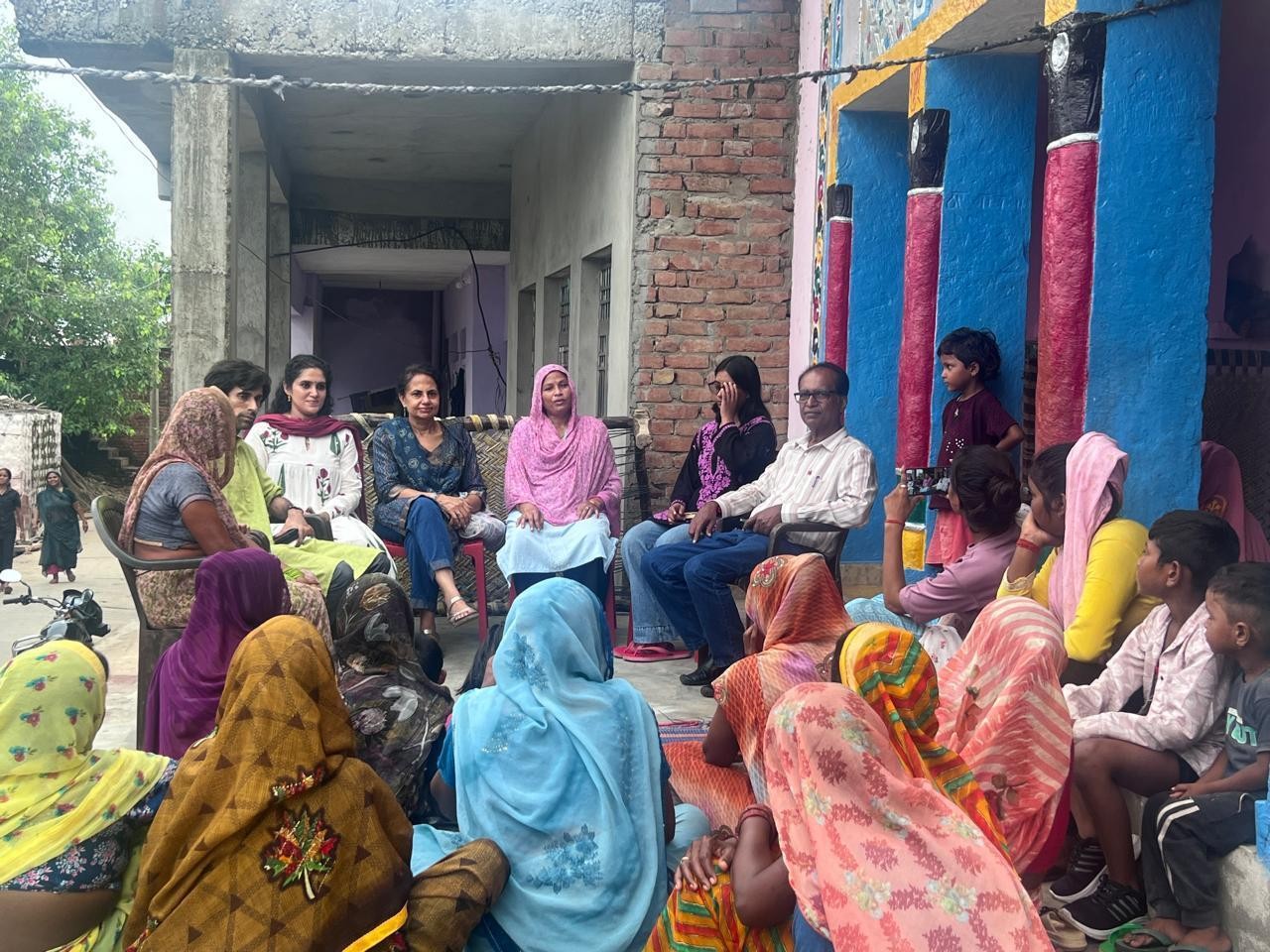
I spent five days this autumn in Dholpur, a district in the northern Indian state of Rajasthan that the government lists among its priority districts for development.1 I went to see Jagan Foundation's work up close, with the Foundation's field teams and a group of mentors, donors and partners. We moved through villages, Jatoli, Khurd, Alehpura, Kaantar Ka Pura, Nagla Dulha Ka, across the Dholpur, Rajakhera and Badi blocks, sat with women, and met district officials. I came back with one question I could not put down. How do you reach the most vulnerable women in a place where the public systems meant to serve them barely stretch that far?
What I saw
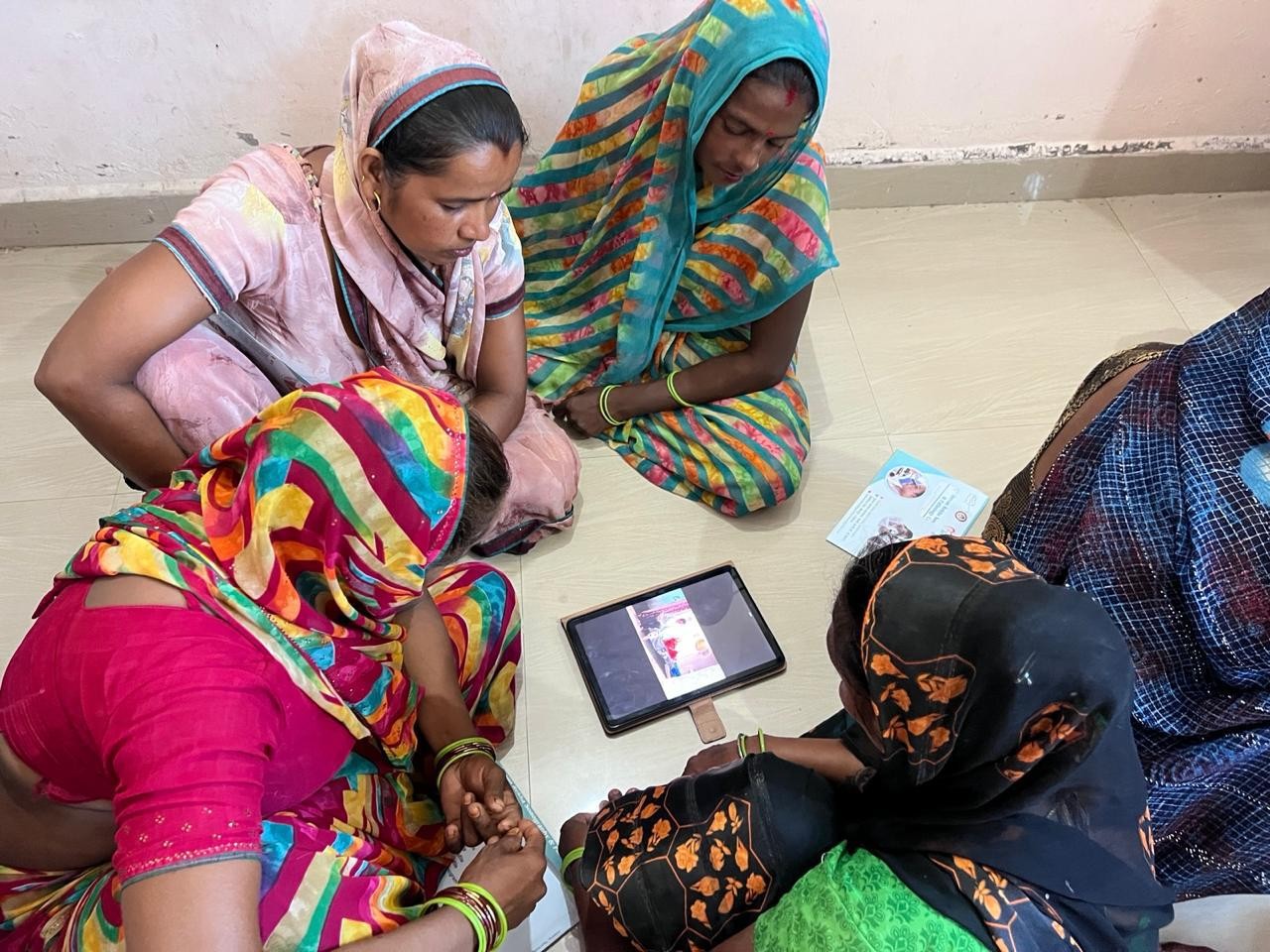
The thing that stayed with me was a group of rural women Jagan had chosen and trained as Digital Sakhis.2 A Sakhi is a trusted woman friend, and here the word is a role. Each carries a tablet and runs short sessions in homes and courtyards on three subjects their communities rarely get clear information on: menstrual health, family planning and childbirth. Where the health system does not reach, she does. Many of the women she sits with had never been given plain facts about their own bodies before.
Watching them, I kept thinking about what changes when a woman stops being someone a programme delivers services to and becomes someone who drives change in her own village.
The missing link
Awareness on its own does not travel far if a woman then cannot get the product, the care, or the income she needs. In Dholpur, as across much of rural India, menstrual and other essential products are simply not available nearby, and the demand sits unmet.
Health and livelihood are not two separate problems for two separate projects. They are the same problem seen from two sides.
So the question I worked on with the Jagan team was a practical one. Could the same trusted woman who carries the health message also run a small enterprise from her home, stocking the essentials her neighbours cannot easily buy, and earn from it? That is the move from a Digital Sakhi to what we began calling a Swasthya Sakhi, a health-and-livelihood worker rather than an awareness worker alone.
What it would take, and what it must not become
I want to be careful here, because the idea is more fragile than it looks. Entrepreneurship on its own improves no one's health. A woman stepping into this role needs real training, a reliable supply of stock, and steady support to carry a livelihood and community health work at once without being stretched thin. And reaching a community is not the same as earning its trust. Conversations about menstruation and family planning ask for sensitivity and familiarity, which is exactly what a local woman brings and an outside programme cannot.
There is a line to hold. The aim is to strengthen the support around these women, not to quietly hand them work that belongs to the wider health system. A Sakhi is not a substitute for a health centre. And technology is not a shortcut. In many interior villages even a mobile signal is unreliable, so a model that leans too hard on an app will fail the women furthest from the road.
Three things the field made plain
Five days on the ground settled three things for me.
Trust takes time. Women engage when the information is reliable, the products are actually there, and the same person keeps showing up, not once, but across seasons.
Training is not enough. These women need continued guidance, supervision and resources, not a workshop and a goodbye.
And numbers are not the measure. How many women were reached matters far less than whether they can now get care, decide for themselves, and use what they learned.
The real measure of progress
The visit also made me value the institutions already on the ground. The Anganwadi centres (India's village child-care and health posts), the government's Auxiliary Nurse Midwives, the Chief Medical Officer's team and local doctors are the public health system at the last mile. A model like this works only if it connects to them and complements them, rather than running alongside as a parallel world. If we expand it across Rajasthan, scaling has to mean making the programme work better for more women, not simply counting more Sakhis.
What stayed with me from Dholpur was not the list of activities. It was the possibility of joining three things that development usually keeps in separate rooms: a woman's health, her livelihood, and her say over her own life. Done well, the Swasthya Sakhi is all three at once.
Done badly, she is none of them. Which is what the next two pieces are about. If we are going to ask one woman to both advise and sell, we have to be honest about the conflict that hides inside that, and about who pays for the part of her work the market never will. I take up each in turn.
Editor's Note · KairoPact
KairoPact is building a global initiative that brings care, health and livelihoods together into one programme, on the evidence that a woman's income rises fastest when the three are addressed at once rather than in separate projects. If you fund or run work on women's livelihoods, childcare or women's health, and would like to be part of shaping it, write to us at connect@kairopact.com.
Sources
- Dholpur is a government-designated priority (Aspirational) district, NITI Aayog: www.niti.gov.in
- Jagan Foundation programme material (the Digital Sakhi health-education modules and the Kalyani Kendra micro-enterprise programme), shared for this series; field observations are the author's own, from a five-day visit.