
In the first piece I described a hopeful idea from the field: the move from a Digital Sakhi, who carries health information into a village, to a Swasthya Sakhi, who also runs a small shop and earns from it. One trusted woman, carrying both the knowledge and the product. The development sector loves this picture, and most days so do I. But I have spent twenty years building programmes that lean on exactly this woman, so let me say plainly what we are slow to admit. The moment she earns on what she recommends, we fuse her advice to her income, and the two do not always point the same way.
Two good ideas that quietly collide
The most careful thinkers in menstrual health have spent a decade making one argument: a girl should have a real choice. A disposable pad, a washable cloth kit, a cup, whatever suits her body, her water and her purse, not whatever a campaign happens to be promoting. The founders of India's menstrual health alliance built their work on this, that we must stop treating the disposable pad as the only answer.4
Now set that beside the other idea the sector has fallen for, the woman who earns by selling that pad. Put both in one person and they pull against each other. A woman who takes a margin on every disposable pad has a quiet reason to recommend the pad, not the cloth kit that might serve the girl better and cost her far less over a year.
Her best advice and her best month stop agreeing.
We would not accept this anywhere else
We would never allow it in a clinic. When a doctor profits from the exact product she prescribes, every medical-ethics body treats it as a conflict of interest to be disclosed and managed, because money bends judgement toward the sale even in good people.3 We built the same arrangement into the village and saw nothing wrong, because the seller was poor, and a woman, and the product cost a few rupees.
The evidence is not comfortable either. When a trial in Uganda turned community health workers into sellers, their behaviour shifted, and selling carried a social cost that simply giving did not.2 And the global consensus has already drawn the line. The World Health Organization's guidance on community health workers is that they should be paid a proper wage for the work, and should not be paid mainly through sales or performance incentives, precisely because tying a health worker's income to a transaction distorts what she does.1 We have ignored that line in menstrual health and called the result enterprise.
The fix is the incentive, not her character
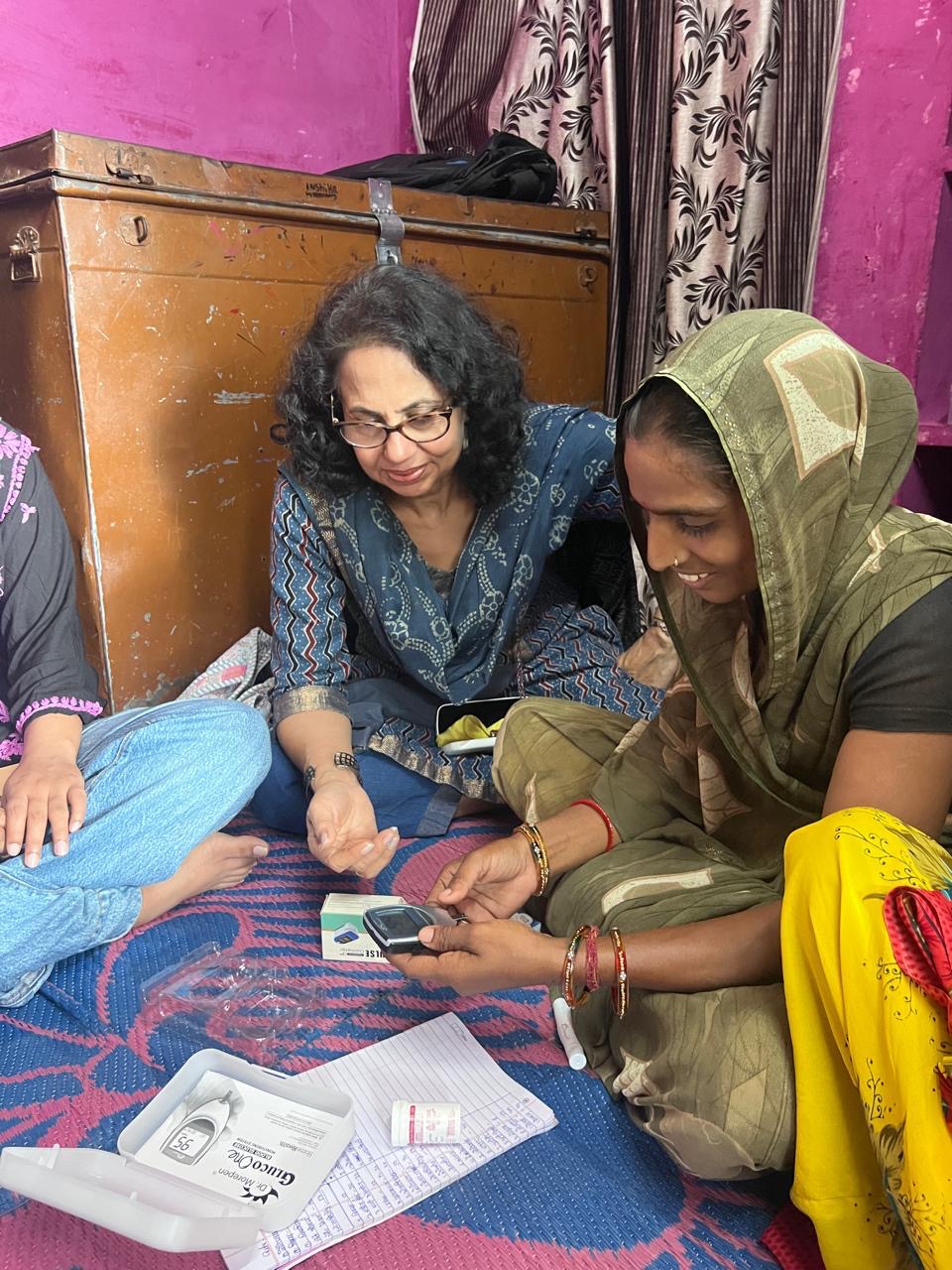
The answer is not to doubt her. These women are usually the most trusted people in their villages and they want the girl to be well. The answer is to change what she is paid for.
Pay her for the health work, not for the product she moves. Let her earn for the session she runs, for the girl who keeps managing her period and stays in school, for the follow-up she does, and let the pad be sold by someone whose job is to sell, or bought wherever the girl likes. Separate the advising from the selling and the conflict disappears.
Here is where the hard question hides, and I would rather face it than wave it away. Her advice, her trust, her follow-up is a public good, and the market will not pay for it. Someone has to, and durably. For a government, the World Health Organization's answer is plain, a salary from taxpayers, which is what its guidance assumes. A non-profit has no taxpayers behind it. Its task is therefore harder and more interesting, to fund that health work in a way that neither depends on her pushing a product nor vanishes when a grant ends. That is a financing problem, not a slogan, and it is the subject of the final piece.
The better field programmes are already feeling their way toward this, pairing the woman who advises with a different woman who runs the shop, and training on the whole basket of options rather than one product. That instinct, to keep advice honest by not paying it a commission, is the right one.
One question before you scale
So here is the single test I would put to anyone about to build a woman-led health model, and many of us are about to. Ask one question. Does this woman earn more when she gives better advice, or when she sells more pads? If the honest answer is the second, you have not built care. You have built a sales force and dressed it up as helping her.
The trusted woman is the most valuable thing this work has. The least we owe her, and the girls who believe her, is to make sure we are not quietly selling them her own trust.
Editor's Note · KairoPact
KairoPact is building a global initiative that brings care, health and livelihoods together into one programme, on the evidence that a woman's income rises fastest when the three are addressed at once rather than in separate projects. If you fund or run work on women's livelihoods, childcare or women's health, and would like to be part of shaping it, write to us at connect@kairopact.com.
Sources
- WHO Guideline on health policy and system support to optimize community health worker programmes (2018), on remuneration and on not relying mainly on performance incentives, WHO.
- When financial incentives backfire: evidence from a community health worker experiment in Uganda, Journal of Development Economics.
- Sale of health-related products, on conflict of interest when a clinician profits from what she recommends, AMA Code of Medical Ethics.
- Tanya Mahajan and Arundati Muralidharan, founders of the Menstrual Health Alliance India, on informed choice and moving beyond the single product, The Wire.