
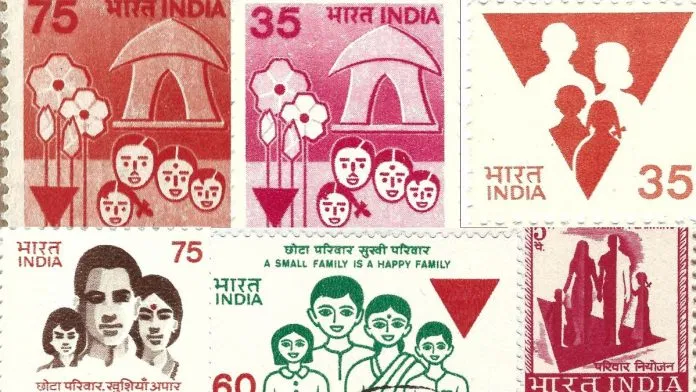
"You are having too many babies." For decades, The Economist reminds us in its June cover leader, that crude message was drilled into Indians by their rulers, "abetted by inept foreign donors." Those four words should make everyone in our sector sit up. The school textbooks Indian children open this year will carry the opposite warning: too few.
India's total fertility rate (TFR), the average number of children a woman will bear in her lifetime, is 1.9 by the Sample Registration System (2023) and falling. Tamil Nadu and West Bengal sit at 1.3, roughly Finland's level; Delhi is lower still at 1.2; beneath that sit only East Asia's extremes, with South Korea below 1.0. The briefing's preferred forecast has the population peaking within two decades, then shrinking by nearly half a billion by century's end. The NFHS-6 data released last month adds the detail the international coverage misses: urban India is already at 1.6, and 29 states and Union Territories are now below replacement. The transition has arrived, and it is moving faster than the institutions built for the old demographic story.
None of this surprises those of us who have spent careers in this space. I wrote last September about India's family planning programme passing through three phases: Fear, Integration, and Opportunity. India is now decisively in Phase 3, and the fear-of-overpopulation framing of Phase 1 is not just outdated but politically reversed. That reversal creates a specific risk for donors that I want to name directly.
Donors are about to be told their work in India is done. The data says the opposite.
The risk: confusing a completed phase with a completed mission
When TFRs fall and political attention turns pro-natalist, donor programmes face pressure from two directions at once. The pro-natalist lobby questions whether contraception funding is appropriate. The "job done" instinct in aid agencies asks whether the problem has been solved. Both impulses point toward defunding. Both are wrong.
The NFHS-6 data makes this plain. One number should concern every donor: modern contraceptive method use has declined from 56.5% in NFHS-5 to 52.7% in NFHS-6, even as overall use rose to 69.1%. The gap is being filled by traditional methods, which jumped from 10.3% to 16.4%. Women are not moving toward better methods. They are moving away from modern ones.
Nor is this a one-survey blip. The growth of traditional methods has been visible across the last three NFHS rounds, each pointing at the same discordance between client needs and donor and national programming. The rise is happening outside India too; what is unique to India, as my friend Niranjan Saggurti's analysis of the NFHS-6 numbers shows, is that the traditional methods used here are controlled by men. For professionals who spent years worrying about male participation in family planning, and for a programme that has not yet heard young couples' pull toward self-care, that is food for thought, not a footnote.
What the quantity-quality shift means clinically
The Economist describes what demographers call the "quantity-quality trade-off": Indian parents, including poor parents in Bihar and UP, concentrating everything on one child, often to afford private tuition.
The clinical implication is one I do not see discussed enough. When a couple makes a definitive decision to have one child, every aspect of that pregnancy matters in a way it simply did not when families had three or four children. The mother's nutrition, her anaemia, her preconception care, the quality of her antenatal follow-up: all of it shapes outcomes not just for her, but for the child on whom her family has bet everything.
Maternal health care has not caught up with these stakes. Iron folic acid for 100 or more days still reaches only 54.9% of mothers, and an urban caesarean rate of 40.5% looks more like a system serving its own convenience than women's choices.
When a couple bets everything on one child, the health of that pregnancy carries a weight it never did when families had three or four. That changes what quality of care must mean.
What The Economist prescribes, and what it leaves out
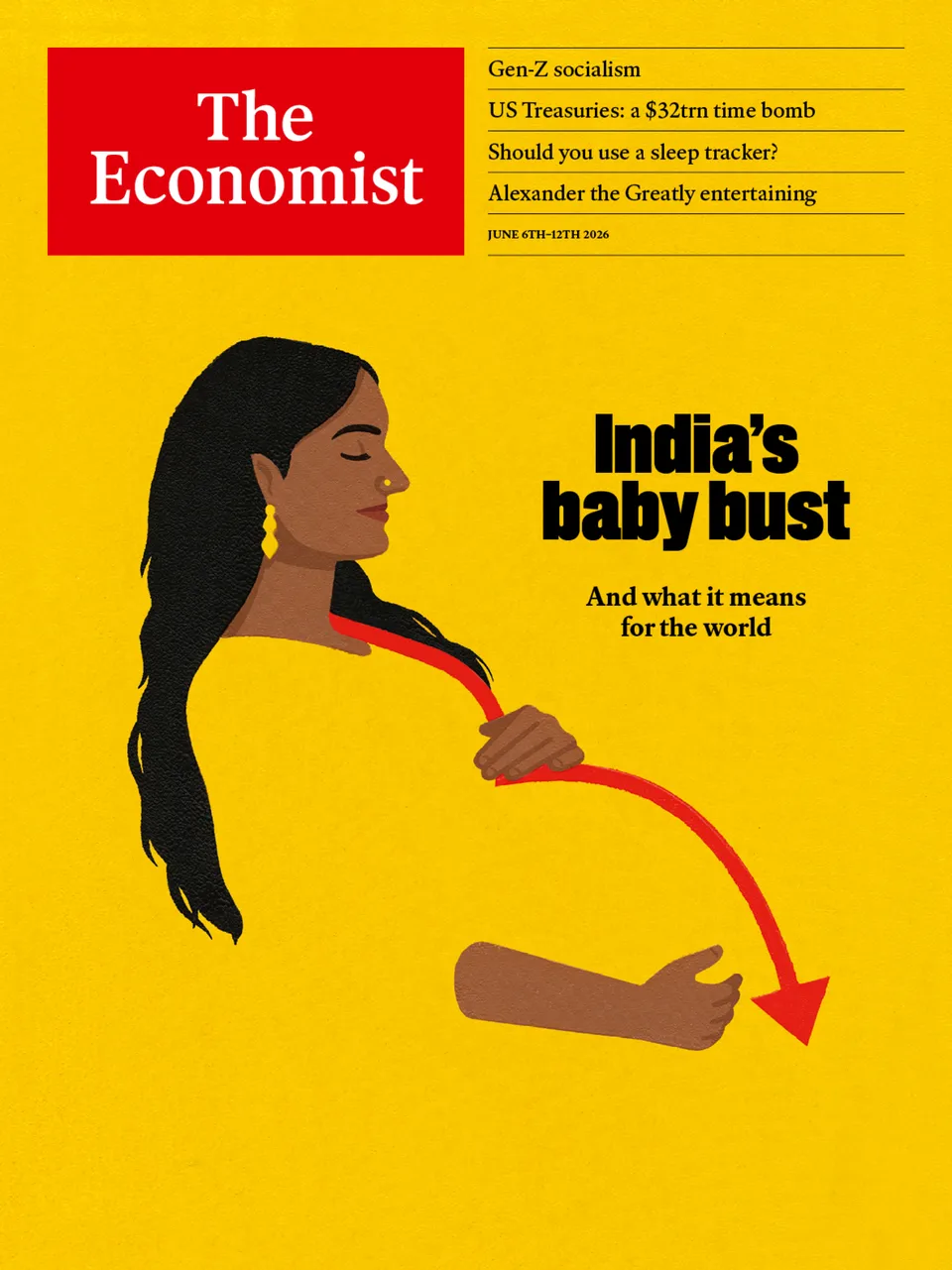
The Economist does offer policy advice. Its first judgement is that pro-natalist incentives will not work. Its verdict on the 30,000 rupee payout for third children offered by Chandrababu Naidu, Chief Minister of the Indian state of Andhra Pradesh, is blunt: "exhortations and bungs will not work." Indian fertility has been declining for seventy years, driven by forces too powerful for governments to reverse: girls' education, lower child mortality, the aspirations of couples. I agree. Pro-natalist cash is Phase 1 thinking in reverse: the same belief that the state can set a fertility target and steer women's bodies toward it. It failed in one direction; it will fail in the other.
Its second judgement is about consequences. India will get old before it gets rich. Only 12% of the workforce belongs to any pension scheme; even Kerala manages just 19.4%. Its single concrete prescription follows: raise the tax take by bringing far more people, especially women, into the formal labour force.
That prescription is sound. It is also incomplete in a way The Economist does not seem to notice. A woman's entry into the formal labour force is not a fiscal lever; it runs directly through her reproductive life.
But what if the causality is reversed, as I argued in September? What if it is the ability to decide whether and when to be pregnant that allows a young woman to finish her education, hold a job, and build a livelihood? Then the arithmetic changes. An unplanned second pregnancy at 23, untreated anaemia, a method basket offering sterilisation or little else: any one of these can end a working life before it begins.
The leader mentions donors only once, as the inept abettors of the population-control era, and says nothing about what they should do now. Let me fill that silence.
The Economist wants women in the formal labour force. It is silent on the machinery that gets them there. That machinery is reproductive health.
The method mix is moving in the wrong direction
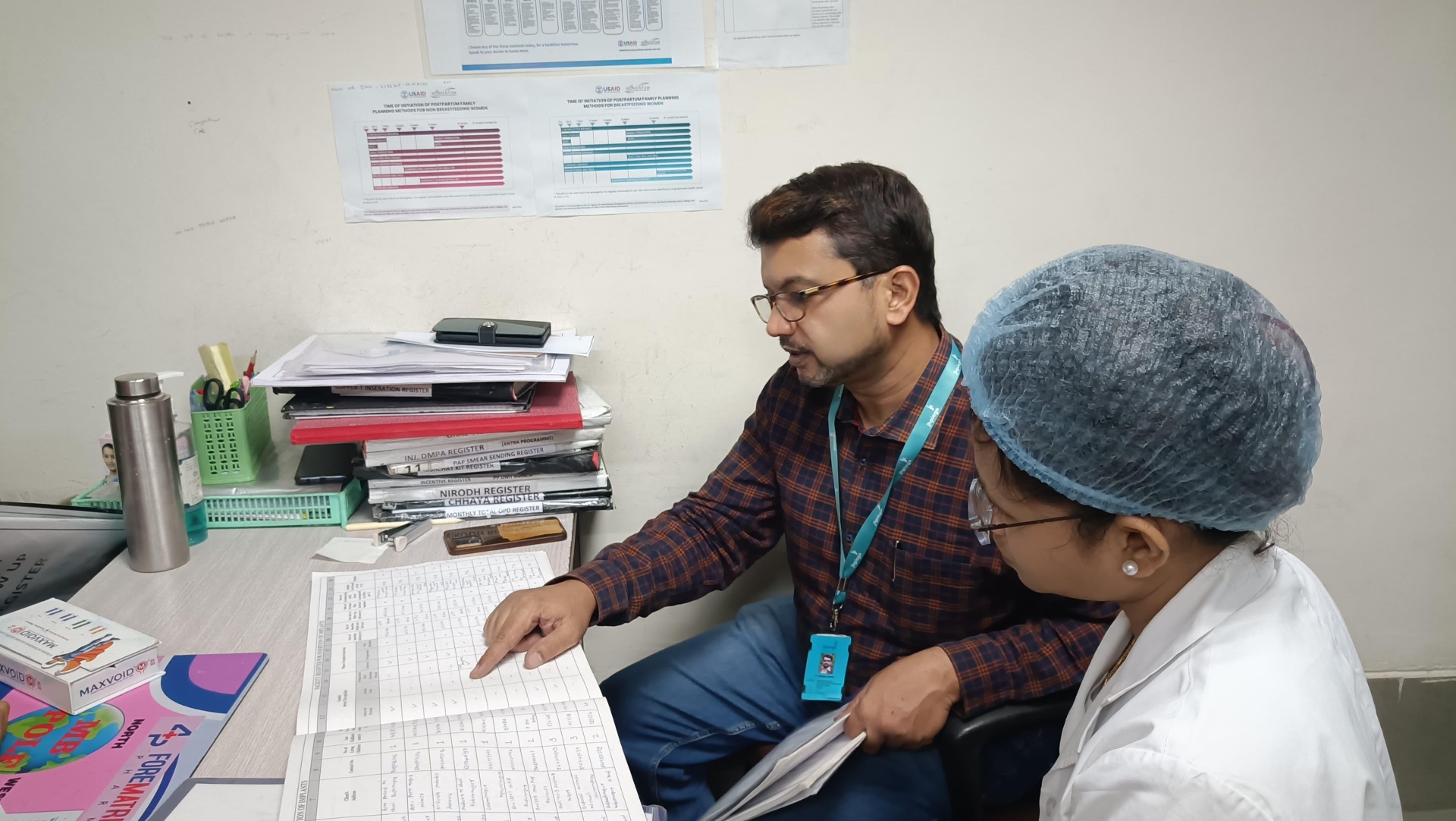
Female sterilisation, the method of 36.5% of currently married women nationally, reflects history, not current demand. Women who do not want sterilisation, cannot sustain daily pill adherence, or have had poor experiences with short-term methods are falling back on rhythm and withdrawal. The programme has not given them a better option. And unmet need for spacing, exactly the need of young couples, has actually risen, from 4.0% to 4.5%.
The methods that could bridge this gap are barely present in India. Long-acting reversible contraceptives: hormonal IUDs and subdermal implants. Where scaled, they have changed what contraceptive choice means in practice: as effective as sterilisation, fully reversible, no daily adherence. For women making high-stakes one-child decisions who do not want to close the door permanently, they are precisely what is needed.
Yet the NFHS-6 fact sheets do not even list implants or hormonal IUDs as separate indicators; they disappear into a footnote, "other modern methods not shown separately." That is an accurate reflection of volumes so low that the national survey has no reason to track them. The barrier is not acceptability but availability and cost.
Implants and hormonal IUDs do not appear as a separate line in NFHS-6. They are too rare to count. That is the gap donors should fund.
Family planning is not contraception
There is a larger reframing underneath all of this, the one I most want donors to sit with. We have allowed family planning to become a synonym for contraception. It never was. Family planning is the full continuum of helping a woman have the family she wants: no more children than she wants, no fewer, in the health she deserves, at the time of her choosing. It is the more inclusive term precisely because it includes the voices of couples who want children but cannot have them.
One end of that continuum is the work this field knows: contraception, spacing, safe abortion. The other end is the work it has barely begun. Preconception care, so anaemia is treated before pregnancy rather than discovered at the first antenatal visit. And the couples who want a child and cannot have one, overlooked for decades because lingering population fears made their need feel like someone else's concern.
Infertility, above all, needs treating as a public health problem in its own right. It has moved from a private struggle to a national reproductive health crisis, affecting an estimated 27.5 million Indian couples, with secondary infertility rising even as the country celebrates replacement-level fertility. Yet the public system barely acknowledges it: prevention is absent from primary care, treatment is absent from secondary hospitals, and care sits in private facilities concentrated in the south and west, leaving much of the country in treatment deserts. Most insurance excludes it, and PM-JAY, India's flagship public health insurance scheme, lists it as "elective" care, pushing families into catastrophic out-of-pocket spending while the stigma falls, as it usually does, on women. Perhaps it is time donors started funding infertility interventions.
And the continuum is lengthening. As urban TFR settles at 1.6 and childbearing moves later in the cities, more Indian women are confronting the narrowing window, turning to assisted reproduction or being sold egg freezing as insurance against the biological clock. These options come with their own perils, and a serious family planning programme has to be honest about them. Egg freezing is costly, demands repeated cycles of hormonal stimulation, and offers success rates that fall steeply at exactly the ages when most women can finally afford it. It is sold by a private fertility industry whose marketing runs ahead of its evidence. A woman deciding at 32 whether to freeze her eggs deserves the same unbiased counselling we demand for a woman deciding at 22 whether to get an IUD. Today she gets a sales pitch.
A perk that helps a woman keep working is not a system that helps her have the family she wants, and urban India imports its benefits culture quickly. The traditional programme, built to curtail pregnancy and still measuring itself that way, has nothing to say to her. A Phase 3 programme must embrace both dichotomies at once: the woman who wants no pregnancy now, and the woman racing to have one before the window closes. Same continuum. Same principle of choice.
Preventing an unwanted pregnancy and enabling a wanted, healthy one are opposite ends of the same continuum. A programme that holds only one end is holding half a mandate.
What donors should do differently
Three things.
Do not interpret falling TFRs as a reason to defund. The aggregate conceals a system in mid-transition: method mix moving the wrong way, unmet need persisting unevenly, quality of care short of what single-child families deserve.
Resist pro-natalist pressure on programme framing. Family planning funded in response to fear of too many or too few is family planning built on the wrong foundation.
Invest in choices across the whole continuum, not in a method. Whether it is LARCs, preconception care, infertility services, honest counselling on fertility preservation, or improving the effectiveness of the traditional methods young couples are already choosing, fund whatever lets people act on what they actually want, and back quality standards in a fast-growing fertility market. The woman paying for IVF in Pune and the woman seeking to space her pregnancies in Patna are at opposite ends of the same continuum; a donor portfolio should hold both. And change whom you listen to. This field has been overshadowed by demographers and population numbers for too long; it is time sociologists, gender experts, and young people themselves were heard more.
India's baby bust is real, and The Economist is right that the transition will not be pain-free. But it is also right about something more important: the sources of falling fertility are unambiguously good, because they are the choices of educated, healthier, more ambitious people. Those choices now need a health system worthy of them, and a donor community willing to fund the harder work of Phase 3 rather than the comfortable metrics of Phase 1.
Family planning needs more anthropologists than demographers. What it needs now, from donors, is more courage than caution.
Sources and further reading
"India's baby bust, and what it means for the world", cover leader and briefing, The Economist, June 6th-12th 2026.
National Family Health Survey (NFHS-6) 2023-24 Fact Sheets, International Institute for Population Sciences / Ministry of Health and Family Welfare.
Niranjan Saggurti, "A silent contraceptive transition in India", LinkedIn, 2026.
Emma Goldberg, "Your Boss Will Freeze Your Eggs Now", the New York Times, June 29, 2024.
Sample Registration System (SRS) Statistical Report 2023, Office of the Registrar General, India.
UNFPA India, "Changing Fertility Behaviours" (infertility estimate of 27.5 million couples).
"Overlooked infertility care should be part of national health services, says WHO", Reuters, November 2025.
The Japan Times, "Japan, in need of more babies, is helping pay for costly IVF", April 2022; Akira Iwase, "Japanese reproductive medicine under health insurance", Reproductive Medicine and Biology, 2025.
Reuters, "Beijing to cover IVF, other fertility treatments for couples", June 2023.
Fertility Europe / ESHRE, European Atlas of Fertility Treatment Policies.
ThePrint, "Population control messages on Indian stamps from 1966 to 2005: how the postal department played a key role" (source of the stamps image).
Dr Abhijeet Pathak, "SRH, More Relevant Than Ever: A New Narrative for India's Family Planning", LinkedIn, September 2025.