

There is a moment in every coalition's life that the literature rarely prepares you for: the moment you realise the alliance you helped build has done its job, and the question is no longer how to sustain it, but who is best placed to carry its mandate forward, or whether it needs to carry on at all.
Abhilash and I have been in that room. Between us, we have conceptualised and led major health collaboratives, managed secretariats, convened competing industry players around shared agendas, and eventually handed over the keys when the work warranted it. That experience, together with a landscape study we co-authored on eight global alliances, gives us a clear vantage point on a question now facing the development sector: when should organisations form coalitions, what does real collective impact look like, and what does a responsible endpoint look like?
The moment is unusually urgent. OECD data show that official development assistance fell by 7.1 percent in real terms in 2024, the first decline after five years of growth. Preliminary OECD figures for 2025 then showed a further 23.1 percent real-terms drop, the largest annual contraction on record. The early 2025 freeze, termination, and restructuring of USAID-funded programmes intensified this shock, with closures and service reductions reported across health, nutrition, HIV, TB, and education programmes in multiple low- and middle-income countries. For some organisations navigating this resource contraction, coalition-building may become one of the few viable pathways to continued relevance and impact.
Getting competitors into a room is the easy part
Keeping them there is harder. So is directing their collective energy toward something none of them could achieve alone. That is where most coalitions quietly come apart.
Coalition discussions often focus on structure: charters, secretariats, membership tiers, and governance rules. These matter. But they describe the machinery, not the purpose. A coalition becomes useful only when five basics are in place. Without them, the coordination required for meaningful, population-level change tends to collapse.
These five conditions were first articulated by John Kania and Mark Kramer of FSG in their landmark 2011 Stanford Social Innovation Review article and have been refined through more than a decade of global practice. In 2021, the Collective Impact Forum updated the definition to place equity at its centre: collective impact is a network of community members, organisations, and institutions that advance equity by learning together, aligning, and integrating their actions to achieve population and systems-level change. At its most purposeful, the coalition is not simply a coordination mechanism. It redistributes voice, giving smaller proximate actors a platform they could not access alone and giving governments and markets a single credible interlocutor for a distributed set of interests.
FSG's June 2025 analysis of Collective Impact in the Global South is direct about why this matters now: development challenges require fundamental shifts in systems, and these complexities are magnified in the Global South by variations in culture, language, economic conditions, and ease of doing business within and between countries. Multi-stakeholder collaborations offer a route toward resilience, enabling actors to pool resources, complement each other's efforts, and collectively drive population-level change more efficiently than any single actor can.
The hardest condition: trust among competitors
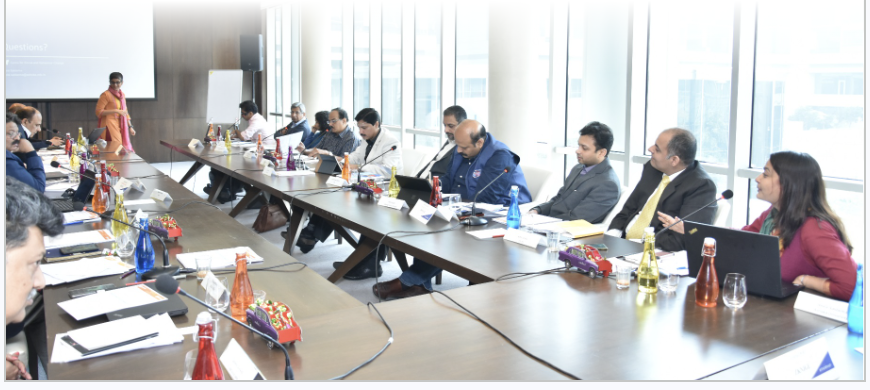
Our landscape study included the Condom Alliance in India, a platform that convened nearly all of the country's key condom manufacturers, marketers, donor organisations, and implementation agencies. These organisations were not natural allies. They competed directly for the same market share, the same government tenders, the same shelf space and consumer attention. In some meetings, the tension was visible. Members wanted the category to grow, but they were also alert to anything that might give a competitor an edge. Goodwill was not enough. Members needed a clear reason to keep showing up.
"You have to be a member-led organisation, for the members, of the members, by the members. A member-led organisation has to be clear on its member value proposition. I have to have my value proposition clear and protected. It is not a science, it is a dance."Adrian Greet, Sustainable Agriculture Initiative Platform, interview conducted for the 2020 alliance landscape review
That reason was the member value proposition. When members can point to specific things they can achieve through the alliance that they cannot achieve by competing alone, the logic of participation holds even under commercial tension. The Condom Alliance's value proposition was rooted in category growth: the condom market in India faced demand challenges, regulatory friction, and stigma that no single brand could address alone. Advocacy to government, shared data, and coordinated communications were genuine pre-competitive benefits. Brands competing fiercely on market share continued to participate because the alliance was doing something no brand campaign could do.
Abhilash and I managed the Condom Alliance secretariat in its early years. Much of the work was unglamorous: preparing agendas, following up after tense discussions, keeping records, translating broad agreement into specific next steps, and making sure members felt the platform was still worth their time. But it was also where we learned how coalitions actually hold together, and what makes them come apart.
What coalitions are uniquely good for
Based on the landscape study and Bridgespan's research on philanthropic collaboratives, drawing on surveys of over 300 collaborative funds, coalitions consistently outperform individual actor effort in three specific conditions.
Where no single actor commands the full landscape. Collaborative funds working in the Global South deliver outsized social impact because they channel resources to proximate leaders, those with lived experience and local knowledge, in ways no external funder navigating new geographies can replicate alone. A coalition aggregates what is distributed: local trust, context knowledge, implementation reach, and political access.
Where market or system failures require pre-competitive alignment. Category decline, regulatory barriers, shared infrastructure gaps, stigma: these require actors who would otherwise compete to align on a common problem definition before competing on solutions. The industry-level, pre-competitive alliance is built for exactly this class of problem.
Where the credibility of collective voice exceeds individual authority. Governments often pay more attention to a credible alliance of industry actors than to any one organisation speaking alone. A Bridgespan discussion of collaboration in global health highlights Gavi, the Vaccine Alliance, as evidence that structured cross-sector collaboration can achieve what no bilateral relationship can: the pooled legitimacy that changes government behaviour and market structure.
$4 to 7B
Annual funding deployed by surveyed philanthropic collaboratives globally (Bridgespan, 2025)
80%+
Of nearly 40 Global South collaborative funds surveyed: over three-quarters of grantee leaders represent communities served (Bridgespan, 2024)
23.1%
Real-terms fall in official development assistance in 2025, the largest annual drop on record (OECD, April 2026)
The sustainability question: who does, and who pays
Every coalition eventually confronts a version of the same question: once founding donor funding ends, who has the incentive and the capacity to sustain the work?
The clearest lens for working through this comes from a sustainability analysis tool widely used in market systems development, commonly called "Who Does, Who Pays" (drawn from the Making Markets Work for the Poor framework). It asks two deceptively simple questions. Who does what currently, and who will do what in the future? Who pays for what currently, and who will pay for what in the future?
The framework asks us to look beyond the organisation currently holding the work and examine which kind of actor has the long-term incentive and capability to perform that function. Applied to coalition sustainability, it reframes the question away from "how do we keep the coalition funded" toward "which actors in the ecosystem have both the mandate and the incentive to perform the functions the coalition has been performing."
Who does · Function transfer
As a coalition matures, the question shifts from who runs the secretariat to which actor type has the mandate and infrastructure to perform core functions sustainably: a member organisation, an industry body, a government agency, or a hybrid arrangement.
Who pays · Incentive alignment
Sustainable coalition functions are those where someone has a direct interest in paying, because they capture value from the function or because not paying disadvantages them. Donor funding is catalytic, not structural. Enduring incentives, not the next available donor, are the real test of sustainability.
Two coalitions Abhilash was centrally involved in illustrate what this looks like in practice, and how differently it can resolve.
The Udaan Collaborative, which he conceptualised and led, was designed from the start to become a multi-donor platform. Its founding documents explicitly envisaged a funding pool that would grow over time, with corporate sponsorships, CSR investment, and domestic public sector support progressively taking over from USAID. By late 2024, Udaan had onboarded over 7,000 healthcare providers and pharmacists across four states, built a multilingual digital platform reaching nearly eight million people, and run a live youth SRHR helpline serving young people across central and eastern India. It had received expressions of interest from over seventy NGO and implementation partners for a second phase, and was publicly described as among the largest multi-stakeholder SRHR collaboratives of its kind ever built. What it had not yet completed was the transition from single-donor to multi-donor funding. When USAID programmes were dismantled in early 2025, the collaborative closed. Not every coalition closes on its own terms.

The Condom Alliance resolved differently. The secretariat transferred from us to ASSOCHAM, the Associated Chambers of Commerce and Industry of India, in July 2021. ASSOCHAM is an industry body with a standing mandate to represent industry interests to government, precisely the function the alliance most needed in its mature phase. That transfer was the "who does" and "who pays" logic working as it should. The alliance subsequently ran its course.
Interrupted by external forces
Udaan Collaborative
Designed for multi-donor sustainability. Built to scale. Closed prematurely when USAID was dismantled before the funding transition was complete. The providers trained, the platform built, and the young people reached remain. The backbone that would have sustained the next phase did not.
Completed on its own terms
Condom Alliance
Secretariat transferred to ASSOCHAM as the natural mandate-holder for industry advocacy to government. The alliance then ran its course. The gains it produced, in category policy, shared data, and market legitimacy, continued after it closed.
The sustainability question, properly framed, is not "how does the coalition continue" but "how do the changes it achieved persist." Those are fundamentally different questions with fundamentally different answers. And the answer sometimes lies outside the coalition's own hands.
Coalitions are not permanent by design
In our experience, the alliance lifecycle follows a recognisable arc:
Phase 01
Catalytic formation
Seed funding and a common agenda bring founding members together. Governance is designed, the member value proposition articulated. Typically donor-anchored.
Phase 02
Growth and validation
Early wins demonstrate the value proposition: policy dialogue, shared data, coordinated advocacy. Member engagement deepens. The alliance earns credibility with government, funders, and external stakeholders.
Phase 03
Maturity and transition
Core functions are assessed against the "who does, who pays" logic. The secretariat may transfer to the member, industry body, or agency best placed to sustain specific functions.
Phase 04
Completion or continuation
If the coalition's purpose has been achieved or absorbed into standing institutional mandates, it runs its course. If interrupted by external forces, the question shifts to which gains can be preserved and by whom.
One of the things the dominant sustainability discourse gets wrong is the implied assumption that a coalition which ends has failed. Some coalitions are formed around time-bounded challenges: a market failure to be corrected, a regulatory barrier to be removed, a category to be revitalised. Others are interrupted before they reach their intended endpoint. In both cases, the measure of the coalition is not its longevity. It is whether the gains it produced continued after it was done.
Where coalitions work, and where they struggle
Five conditions where coalitions consistently outperform individual actor effort
Pre-competitive challenges
When the problem exists at the category or system level and solving it benefits all members regardless of competitive position, the coalition is often the only structure with both the incentive and the authority to act. Declining demand, regulatory friction, shared stigma, infrastructure gaps: none can be fixed by one actor working alone.
Advocacy requiring collective voice
Governments often pay more attention to a credible alliance than to any single organisation. Bridgespan notes that bringing unlikely allies together increases advocacy effectiveness, especially where private sector actors need to engage on enabling policy.
Shared knowledge infrastructure
Consumer research, regulatory intelligence, shared data systems, and common measurement frameworks cost more to produce individually than collectively. Coalitions are natural producers of shared infrastructure that benefits all members regardless of competitive position.
Proximate actors and voice
In parts of the Global South where ODA contraction has increased pressure to pool credibility and resources, the coalition becomes a channel that amplifies the knowledge of proximate actors rather than displacing them with external expertise.
Cross-cutting problems with no natural owner
Food systems reform, early childhood development, youth sexual and reproductive health: these cut across mandates and sector boundaries. No single entity has the authority or resources to address them. A coalition can give such problems a temporary home.
Where coalitions tend to struggle
When the common agenda is imposed rather than co-created. When backbone support is underfunded relative to coordination demands. When member participation is nominal. When donor timelines compress the maturity arc. When the single-to-multi-donor funding transition is designed but not yet complete. And when perpetuation of the structure becomes an end in itself, detached from the original mission.
What this means for how we work
At KairoPact, we are not neutral observers of this landscape. We have conceptualised and led large-scale collaboratives, designed governance structures, run secretariats, managed the politics of multi-member alliances, and handed work to the institutions best placed to carry it. We have also watched a collaborative we built be closed by forces outside our control, and sat with the question of what persists when the backbone is removed.
That direct experience is what we bring when organisations are thinking about coalition design, secretariat infrastructure, or the sustainability of existing alliance structures. The research from FSG's Collective Impact Forum, Bridgespan's collaborative landscape work, and the BEAM Exchange's market systems sustainability tools all converges on the same insight we have encountered in practice. The question is never whether to build a coalition or how to keep one alive indefinitely. The question is whether the problem you are trying to solve requires coordinated action, whether the structure is genuinely designed around the interests of those who should own it, and whether you have honestly applied the "who does, who pays" test to what happens when founding energy and funding recede.
When these elements are in place, a coalition can be one of the most useful instruments in development practice. Without them, it can quickly become an expensive governance exercise with no real purpose. And when external forces cut a coalition short before its sustainability transition is complete, the loss is real, even if the gains it produced are not.
Research basis: This piece draws on a landscape review co-authored by Aprajita Singh and Abhilash Philip for the SHOPS Plus project (USAID/Abt Associates), December 2020, covering key informant interviews with eight alliances: Asia Pacific Malaria Elimination Network (APMEN), Advocating Reproductive Choices (ARC), Health Workers for All Coalition (HW4All), Kenya Healthcare Federation (KHF), International Food and Beverage Alliance (IFBA), Marine Stewardship Council (MSC), Reproductive Health Supplies Coalition (RHSC), and Sustainable Agriculture Initiative Platform (SAIP). The Adrian Greet quote is from that interview series and has not been separately published. Udaan Collaborative data is drawn from programme documents (MOMENTUM Country and Global Leadership, India-Yash, Cooperative Agreement #7200AA20CA00002, led by Jhpiego) and The CSR Universe, USAID and Jhpiego Launch Udaan Collaborative (August 15, 2024). External sources: OECD, International Aid Fell Sharply in 2025 (April 2026); OECD, Official Development Assistance 2024 Figures (April 2025); Bridgespan Group, The Power of Collaboration at a Time of Volatility in Global Health and Development (2025); Bridgespan Group, Want to Fund in the Global South? (2024); Bridgespan Group, The Philanthropic Collaborative Landscape (2025); FSG, Unlocking Collective Impact in the Global South (June 2025); Kania, J. and Kramer, M., Collective Impact, Stanford Social Innovation Review (2011); Collective Impact Forum, Redefining Collective Impact (2021); BEAM Exchange, Who Does, Who Pays? Sustainability Analysis Framework. The Condom Alliance secretariat transfer to ASSOCHAM in July 2021 is on public record. The YouTube channels of both collaboratives remain publicly accessible: Udaan Collaborative, Condom Alliance, and 50 Shades of Ishq (the Condom Alliance awareness campaign channel).