"I remember the day very clearly."
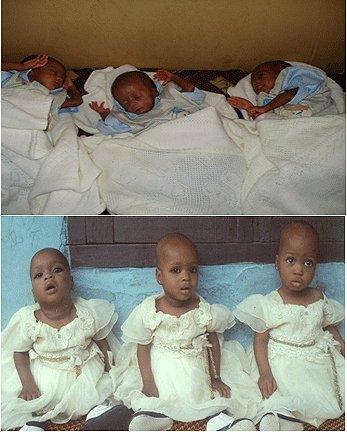
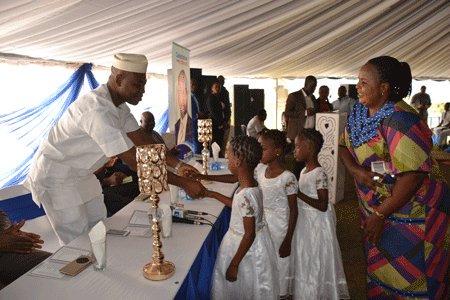
It was my last day in office as Commissioner for Health in Ondo State. Three children came to say goodbye. Triplets. They had just turned ten. They were born in a remote community called Ipogun, and ten years earlier, under the Abiye Safe Motherhood Programme, we had worked hard to make sure their mother survived the delivery. All thirteen sets of triplets from that period were saved.
I stood there and felt something I carry with me into every room I enter today: the quiet, incontrovertible proof that when the system works, mothers live.
Nigeria is a country where the numbers tell a brutal story.
We account for nearly a third of global maternal deaths, according to recent UN estimates.
Our maternal mortality ratio remains around 1,000 deaths per 100,000 live births. A Nigerian woman faces roughly a 1 in 22 lifetime risk of dying from pregnancy, childbirth, postpartum, or post-abortion complications. That is not a statistic you can sit comfortably with. It is a call to action.
That is what the Maternal and Neonatal Mortality Reduction Innovation Initiative, known as MAMII, is: a national response to an unacceptable reality.
From Ondo to the Nation: The Journey of an Idea
What we built in Ondo State between 2009 and 2017 was not complicated. It was persistent. Under the Abiye Safe Motherhood Programme, we reported significant reductions in maternal mortality, from 742 to 253 per 100,000 live births. We did it by working with communities, not around them. We worked with traditional birth attendants, not against them.
We made sure a woman in Ipogun could reach a General Hospital when she needed one. We made sure that when she arrived, someone was ready and equipped to receive her.
The model attracted attention from development partners and researchers. The World Bank supported its documentation. But more importantly, it worked. And I always believed it could work at scale.
What MAMII represents is precisely that: the scale-up of a proven model, now embedded within Nigeria's Sector-Wide Approach to Planning, supported by the Federal Ministry of Health under the leadership of Coordinating Minister Professor Muhammad Ali Pate.
This time, we are not working in one state. We are working across 33 states, targeting 172 Local Government Areas that account for up to 55% of the country's maternal deaths.
If you want to change the national numbers, that is where you must go.
The Problem Was Never Just Clinical
One of the most important things I have learned in over two decades of public health work is that mothers do not die only from medical complications.
They die from delays.
The traditional framework in global health speaks of three delays: the delay in deciding to seek care, the delay in reaching a facility, and the delay in receiving care once there. These are real. But in our experience, we saw two more. The delay caused by a broken accountability system, where a maternal death is recorded but never investigated. And the delay caused by poor coordination between the many actors who all claim to be helping.
MAMII was designed to address all five.
We deploy MAMII Vanguards in communities. These are trained health workers who know the community, who are trusted by the community, who identify pregnant women early and track them through the continuum of care from first antenatal visit through postnatal follow-up. We work with traditional birth attendants not as threats to modern medicine but as the trusted gateway through which most women in rural Nigeria first enter the health system.
We have revitalised primary healthcare facilities to meet both basic and comprehensive emergency obstetric care standards. Because it means nothing to get a woman to a facility if the facility cannot help her. We have integrated emergency transport through NEMSAS and RESMAT.
Because the distance between a woman in labour in a remote community and the nearest capable facility can be the difference between life and death. That transport is free.
And we are now providing free Caesarean sections for poor and vulnerable women. In the first year of MAMII's activation, thousands of free C-sections were conducted under the programme. Federal Ministry of Health reporting ahead of the 2025 Joint Annual Review indicated a 17% reduction in maternal deaths and a 12% reduction in newborn deaths across the 172 high-burden LGAs. We are watching those numbers closely. We will continue to watch them.
The Architecture That Makes It Possible
None of this would be sustainable without the governance framework that SWAp provides.
Nigeria's health sector has historically suffered from what one writer described as a "complex philharmonic health orchestra without a conductor." Different donors, different programmes, different reporting systems, different priorities.
Everyone doing good work in their own corner. Nobody playing the same score.
SWAp changed that. The framework commits the federal government, all 36 state governments, and our development partners to one plan, one budget, one report, and one conversation. That sounds simple. It is not. It requires extraordinary political will from state governors, deep institutional discipline from development partners accustomed to running their own show, and relentless coordination at the national level.
But when it works, it creates something no vertical programme can: a system that outlasts any individual administration.
Nigeria's approved 2024 federal health allocation was about ₦1.34 trillion, representing 4.64% of the national budget. In September 2024, the World Bank approved a $1.57 billion financing package for Nigeria, including $570 million for the Primary Healthcare Provision Strengthening Program. Direct facility financing means that frontline clinics receive operational funds without waiting for them to move slowly through bureaucratic layers.
Thousands of primary healthcare facilities are now receiving direct financing to keep the lights on, stock the medicines, and be ready.
Data Is Not a Dashboard. Data Is a Discipline.
I have seen too many health programmes that invest in technology and then act as though the investment alone produces change.
A dashboard is not accountability. It is only accountability if someone is watching it, taking responsibility for what it shows, and responding when something goes wrong.
The real work is programme intelligence: not the technology itself, but the human judgment that sits behind it, asks the right questions, and acts on what the data reveals.
MAMII uses sophisticated digital systems. We track individual patients electronically at the LGA level. We use geostatistical models to identify exactly which communities are contributing to mortality burden and to dynamically re-route resources in response. We are working toward digital health coverage at 80% of LGAs, up from 9% at baseline. The Liverpool School of Tropical Medicine is conducting a Gates Foundation-funded evaluation linked to MAMII and maternal-newborn mortality reduction, monitoring the programme's progress in real time.
But the discipline that matters most is not the software. It is what we call Maternal and Perinatal Death Surveillance and Response, or MPDSR.
Every maternal death in every facility is now a sentinel event.
It is reviewed. The root causes are investigated. Was there a blood shortage? Was there a delayed surgical response? Was there a failure in the referral chain? Answers are required. Corrections are made. We are not just counting deaths. We are refusing to accept them as inevitable.
What the World Can Learn from Nigeria
Target precisely, not broadly. We identified 172 LGAs out of 774 that drive over half of national maternal deaths. By concentrating resources there, we maximise the epidemiological return on every naira invested. Uniform national programmes sound comprehensive. They are often thin. Geostatistical precision targeting changes the math.
Build demand and supply together. You can build the most capable facility in a state. If women do not trust it, do not know about it, or cannot afford to use it, it stands empty. The MAMII Vanguards are the demand side of the system. Without them, the supply-side investments deliver far less.
Make emergency transport a health cost, not an individual burden. The second delay kills women because they cannot get to care in time. Free, integrated, GPS-tracked emergency transport is not a luxury. It is a core clinical necessity.
Protect the programme from political cycles. The SWAp compact, signed publicly by governors and backed by binding agreements, creates institutional inertia that is extremely difficult for incoming administrations to reverse. That inertia is intentional. That is the point.
Investigate every death. Not as punishment, but as learning. MPDSR is the discipline that converts tragedy into improvement. Systems that normalise maternal death as an expected outcome will never escape the cycle. Systems that treat every death as a preventable event start to prevent them.
A Personal Note
I was asked recently why I continue to do this work at this pace, at this level of intensity.
I think of that triplet turning ten. I think of the Abiye health workers who carried the programme on their backs for six years, who did not always have everything they needed but showed up anyway. I think of the MAMII Vanguards today, doing the same in 172 LGAs across this country.
I think of the women we have not yet reached. And I think of the data, which tells me plainly that we know what works. We know how to do it.
The only question is whether we will sustain the will to see it through.
Nigeria can be a proof of concept for the world. Not because we are perfect, but because we are a country of 220 million people with some of the worst maternal health indicators on earth, and we are refusing to accept that as our permanent condition. We are doing something about it. And the evidence is beginning to say it is working.
That is the whole story.