Biographies are not meant only for kings, conquerors and film stars. Organisations too have lives worth recording, full of struggle, improvisation, accidents, idealism and, occasionally, survival against impossible odds. In fact, the biography of an organisation is often more interesting than that of an individual because institutions outlive their founders and acquire personalities of their own.
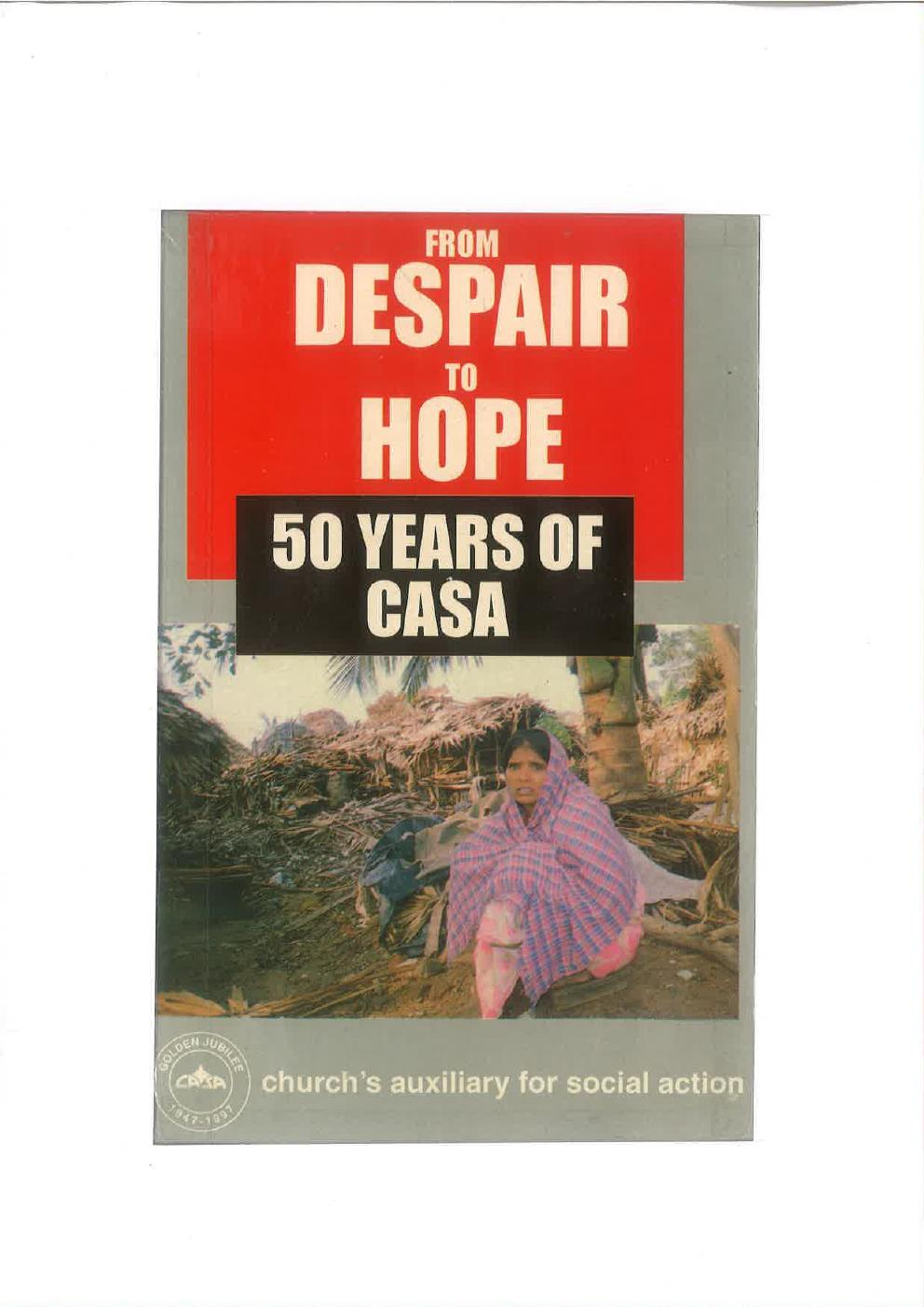
My own engagement with organisational biographies began almost a quarter century ago when the Director of Church's Auxiliary for Social Action, better known as CASA, contacted me. The organisation was preparing to celebrate its fiftieth anniversary and wanted a book chronicling its journey.
At that time, I was with The Indian Express, in charge of the editorial page. I simply did not have the time to undertake a full-fledged research project. I therefore suggested a practical arrangement. CASA could appoint a young person to prepare the first draft while I would supervise, edit and shape the final manuscript.
The organisation agreed. The young researcher was given a desk, a computer and travel facilities for three months. He travelled, interviewed people, collected documents and produced the raw material. I edited the text and prepared it for publication. As promised, the researcher received a salary for three months while I was paid an honorarium. Thus was born the commemorative volume.
Many years later, the Director of Caritas India approached me with a similar request. This time there was very little time available before the jubilee celebrations. I plunged into the files, reports and correspondence accumulated over decades and produced a book that captured the organisation's evolution, achievements and crises.
Incidentally, CASA has roots in Protestant churches, while Caritas belongs to the Catholic tradition. Yet both organisations shared the same anxiety: how to preserve institutional memory before it disappeared into cupboards, fading files and the memories of ageing workers. That anxiety is entirely justified.
An organisation without a documented history is like a person suffering from amnesia.
It may continue functioning, but it loses continuity, identity and perspective.
Biographies of organisations can be as gripping as those of individuals. One of the earliest books of this genre that fascinated me was the story of the House of Tata. Reading it was like watching the industrial history of India unfold before one's eyes. It explained how pioneering enterprises such as Tata Steel, once known as TISCO, and Tata Motors, earlier called TELCO, came into existence. One understood not only business decisions but also the idealism and nation-building spirit behind them.
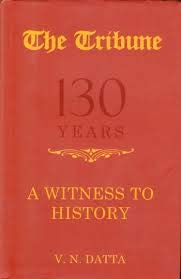
Equally fascinating was the biography of The Tribune, founded by Dyal Singh Majithia, who was at that time richer than Jamshedji Tata.
I have similarly enjoyed books on companies like BlackBerry and Apple. Their stories reveal how organisations rise through innovation, stumble through arrogance and sometimes reinvent themselves through courage.
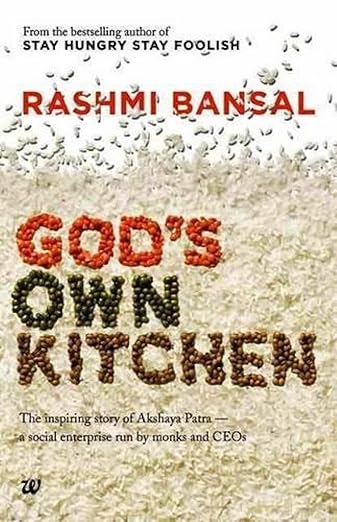
NGOs too have produced memorable institutional biographies. Organisations such as Akshaya Patra Foundation and Sulabh International have compelling stories that go far beyond annual reports and donor presentations. These are narratives of social experimentation, persuasion, fundraising, community resistance and human transformation.
One of the most remarkable examples of documenting organisational history came from an unexpected quarter. In the 1970s, long before he became Prime Minister, Narendra Modi was associated with efforts to document the history of Bharatiya Mazdoor Sangh.
The trade union, founded in 1955, was then still relatively young, but its leaders understood the importance of preserving its institutional journey. Modi reportedly participated in the writing and compilation process connected with the organisation's history.
Organisations that take themselves seriously also take their history seriously.
The episode is significant because it underlines an important truth: Institutional memory is not a luxury. It is part of institution-building itself.
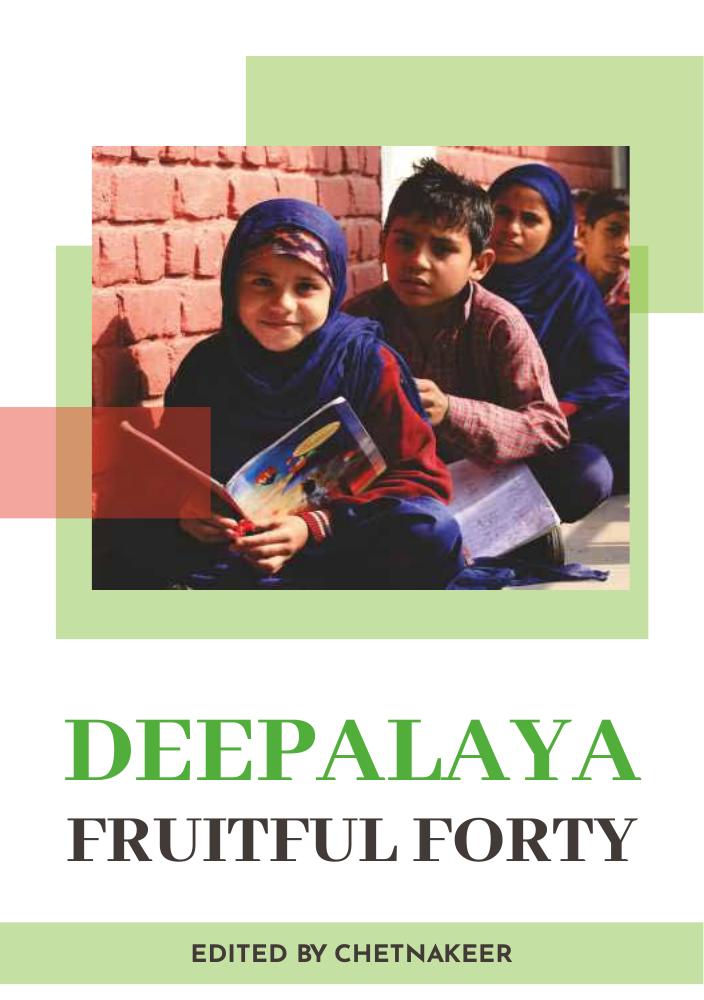
When I was serving as Chief Executive of Deepalaya during its fortieth anniversary celebrations, I felt strongly that the occasion should not pass with mere speeches, banners and dinners. We therefore conceived a different kind of commemorative book.
Instead of producing a conventional history, we invited forty people to write about their association with Deepalaya. Former volunteers, donors, beneficiaries, well-wishers and staff members contributed personal recollections. Edited by Chetna Keer, the volume was published under the title Fruitful Forty.
The book became far more valuable than we had anticipated. Whenever an important visitor came to Deepalaya, we presented a copy to him or her. The reactions were revealing. Visitors who might otherwise have glanced casually at a glossy brochure often spent hours browsing through the book. Personal stories communicated authenticity far more effectively than statistics.
That brings us to the central question: why should organisations spend money on such books?
The first reason is permanence.
A lavish brochure, however beautifully designed, has a tragically short lifespan. It is often discarded after a single glance. A book, however, tends to survive. Somebody places it on a shelf. Years later, another person discovers it. The organisation continues speaking through those pages long after the anniversary celebrations are forgotten.
Secondly, such books become invaluable for employees and volunteers joining the organisation. Every institution has its folklore, stories of difficult beginnings, eccentric founders, near-collapse situations and improbable successes. Unless these are documented, newcomers remain disconnected from the institution's emotional history.
A biography helps employees understand not merely what the organisation does but why it exists.
Thirdly, institutional biographies are extremely useful in collaborative efforts. Corporates, funding agencies and partner organisations often want to understand the ethos of an NGO before associating with it. Financial statements can reveal efficiency; brochures can advertise projects. But only a well-written organisational history can communicate values, culture and credibility.
Fourthly, biographies preserve lessons from failure.
Most annual reports are triumphalist documents. They celebrate achievements and conceal mistakes. A serious institutional history, however, can honestly discuss failed projects, internal disagreements and strategic miscalculations. Such honesty becomes an educational resource for future generations.
There is also a philosophical reason for documenting organisations. Human memory is fragile. NGOs, especially in India, often disappear without leaving a trace. Thousands of extraordinary grassroots experiments vanish because nobody records them. An organisation may die, but if a book survives somewhere in a library, archive or second-hand bookshop, its story still remains accessible to the future.
In the digital age, the possibilities are even greater. Earlier, publishing a book involved substantial costs in printing and distribution. Today, organisations can produce both printed and digital editions. A PDF uploaded online can travel farther than thousands of printed copies. Young researchers, students and social activists can access institutional histories from anywhere in the world.
India alone has thousands upon thousands of NGOs whose stories deserve to be told. Some transformed villages through education. Others revolutionised sanitation, healthcare, women's empowerment or disability support. Their journeys contain drama, conflict, innovation and sacrifice no less compelling than the biographies of celebrated individuals.
Unfortunately, many organisations underestimate the value of their own stories. They assume that only famous personalities deserve biographies. This is a mistake.
Recording such histories is not an exercise in vanity. It is an act of preservation.
Institutions shape societies as profoundly as individuals do. A school, a trade union, a relief organisation or a social movement may influence millions of lives across generations.
Long after commemorative speeches end and anniversary banners fade away, the book remains, quietly waiting on a shelf for someone curious enough to open it and discover how an idea became an institution.